- Mar 23, 2025
Sadhu Stories part 1: Hundreds of Millions of Pilgrims
Entering the frey.
It has now been two months since I first arrived at the Kumbh Mela in Prayagraj, India - “the world’s largest spiritual gathering,” held every 12 years. This year was especially significant, as the planetary energies aligned in a way that happens only every 144 years, making this a Maha Kumbh (Maha = Great).
I knew it was my time to go - with that deep, undeniable inner knowing that defies logic and reason.
The decision was made while I was in Goa, and I had about a month to mentally prepare myself. I flew to Delhi, where I left most of my belongings with a dear friend, telling her, “I’ll be back in a week.”
That is not what happened… in fact, as many of you know, I ‘disappeared’ for 6 weeks.
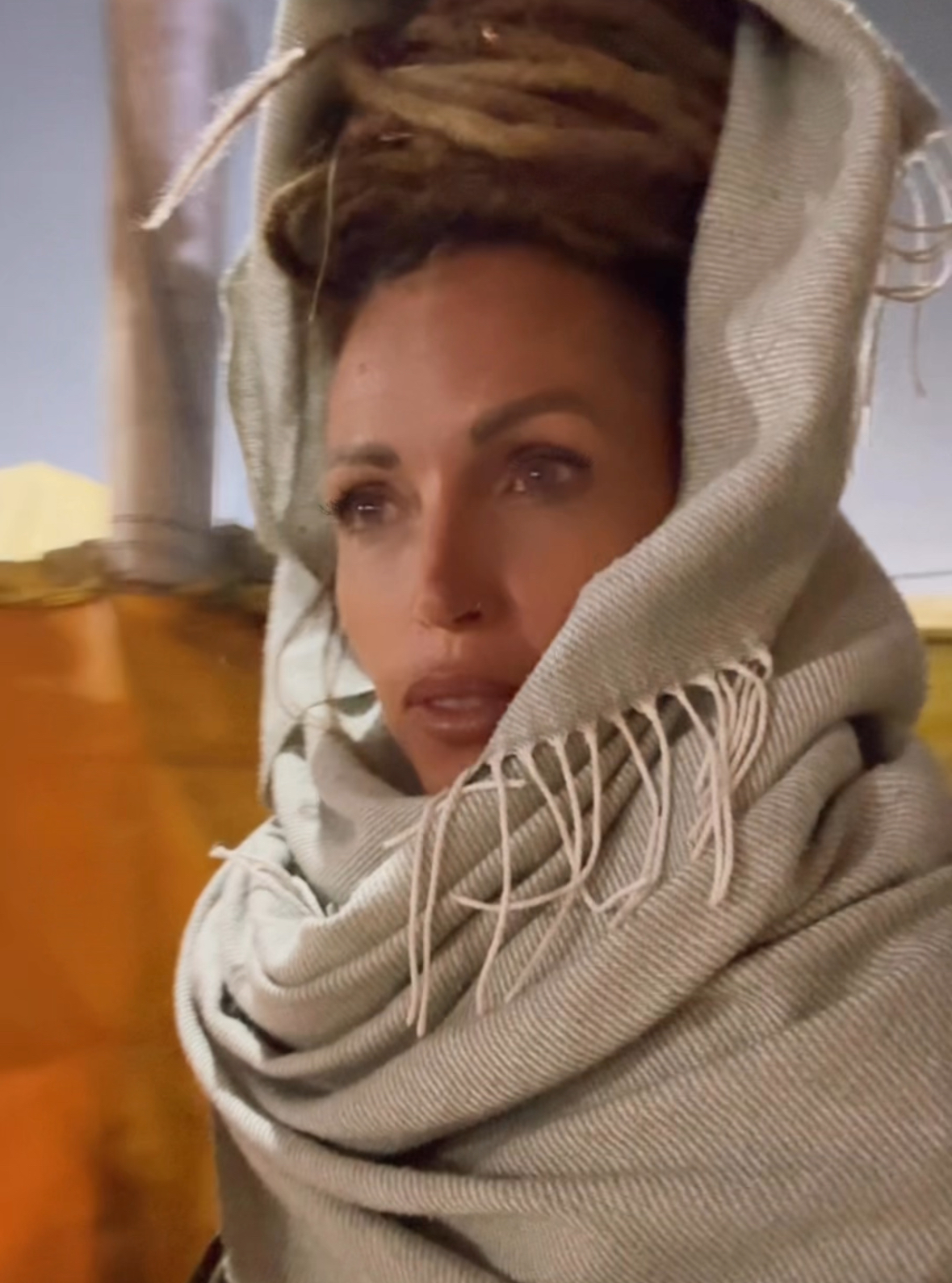
I want to describe my experience as honestly as I can, though there are some things I choose not share out of respect for the Sadhus and their culture. Some of my experiences are shared by the hundreds of millions who attended this year’s Maha Kumbh; others are uniquely mine.
I need you, my friends, to understand that what I share here is a fragment, a mere glimpse into something indescribable. Some things in this world are beyond words, especially the spiritual experiences and the energetic shifts that happened inside of me.
Parts of my ego has been shattered beyond repair. Over time, my physical health deteriorated, and my mental health took a toll.
In hindsight, I have come to realize that part of the deep anxiety I began experiencing was simply due to a slow suffocation - the air was so thick with dust, sand, and smoke from hundreds of thousands of sacred fires burning in the harts of every tent, while many of the poorer pilgrims took to burning plastic to stay warm, I felt like I was breathing poison.
There were times when I felt myself asphyxiating. Oxygen deprived and overwhelmed by layers of walls of noise from megaphones, millions of people screaming different chants to Shiva, Rama and the countless other Gods, stereos blasting mantras, motorbikes and cars honking. As I slept in a tent, there was nowhere to get away from the noise and dirt.
Part of my mental preparation also consisted in the knowing that most public toilets in India are not clean at the best of times, and toilets at festivals in general tend to be pretty gross - so I knew that the toilets at this mega-festival in India would be way way way worse than anything I had yet experienced (and this absolutely turned out to be the case).
I thought I would only stay a few days, so for the the first three days, I couldn’t make myself do a number 2. The friends I arrived with decided to leave, but I decided to stay longer (I will explain why, bare with me!), the shit needed to get out, but somehow my body magically figured out how to limit the visits to once a day (I average about 7-8 trips to the toilet per day in normal life, so this is really a testament to what my body is capable when it needs to).
These things are the material things. It’s easy to write statistics, like that an estimated 600 million people attended this years Mela in Prayagraj for Sangam - the sacred bath at the confluence of the Ganges, Yamuna, and the mythical Saraswati - over the course of the six-week festival. But numbers mean little when faced with an ocean of humanity. I couldn’t comprehend it until I was there, and you wont be able to imagine it even as you read this.
Originally, I planned to take a train, but the trains were overfull, and many were canceled by the government to slow the influx of pilgrims. I was grateful to be with friends because, alone, I don’t think I would have made it.
We managed to get onto a night bus from Delhi. As we neared Prayagraj, the roads were at a complete standstill - though nothing about it was still. The honking, the shouting, the overflowing streets - it was chaos. I saw a man rip the windshield wipers off a bus and start whipping the vehicle while screaming in complete rage. I didnt see what set him off, and to be honest, it is one of the many miracles of the Mela that not more people lost their tempers.
Our bus couldn’t reach the station, so we had to get off several kilometers from where we had planned. I was grateful that I had the foresight to travel light, just a small backpack made it easier to maneuver.
People from all over the world poured in. That first day, we walked about 12 kilometers to reach the festival grounds. Police roadblocks prevented vehicles from entering, though, of course, this is India (where the rules are more like suggestions) so some cars and motorbikes still made it through, honking and pushing their way through the crowds.
At one point, we were on a small hill, and could see the festival grounds stretched out below. My system went into shock. I had never seen so many people at once. Panic rose as I realized that once I entered, there would be no easy way out. Just as it had taken hours to get here, it would take hours of pushing and shoving to get out.
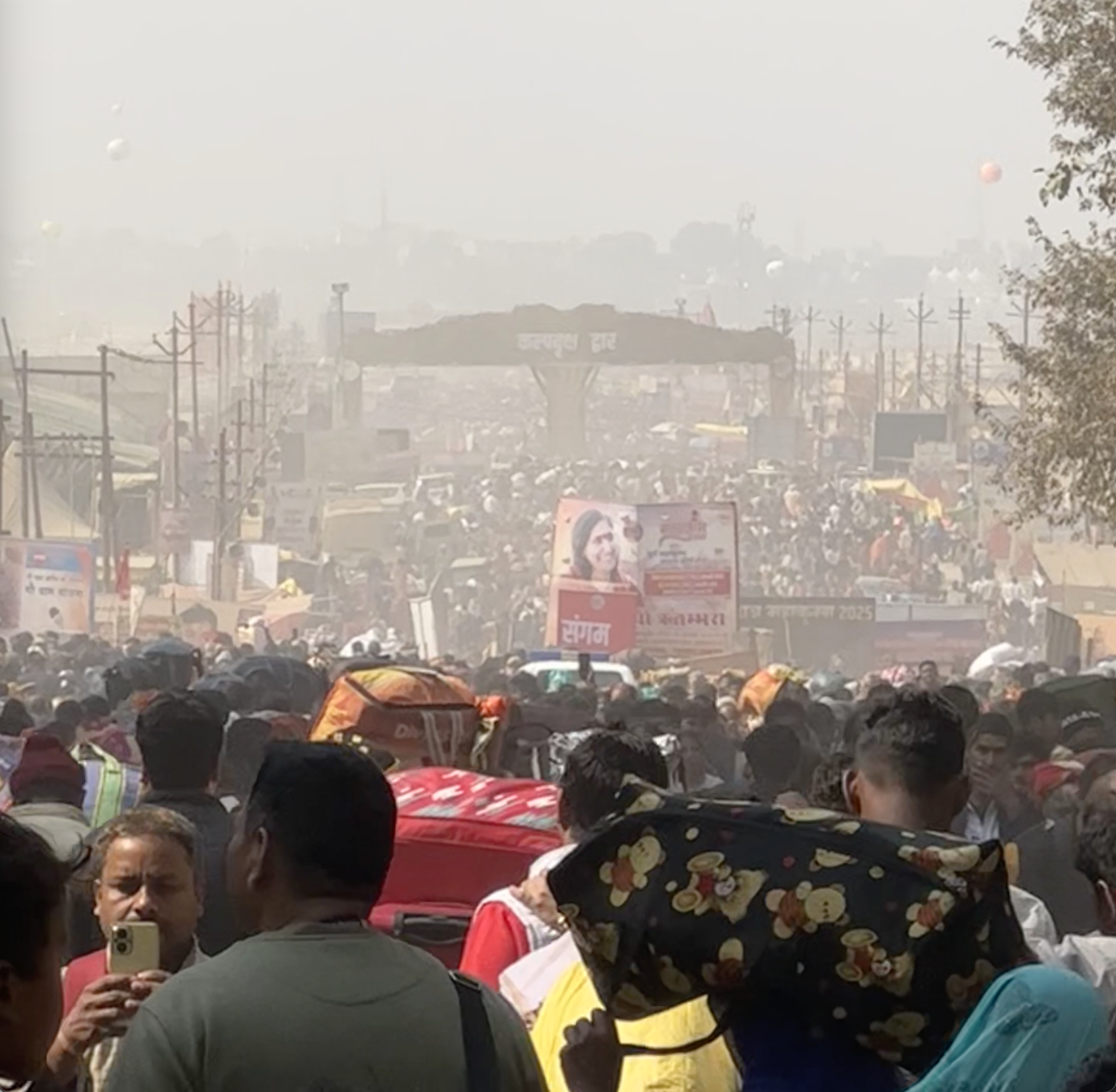
Then, taking a deep breath - like diving into a rushing river - I stepped into the human current, swept along by the flow, urging forward into the fray.
A friend had given me the phone number of Rakesh Giri Baba, one of the hundreds of thousands of Sadhus (Saints) living in the temporary tent city on the dry riverbanks of the Ganges. We tried to find his tent on his instructions, but in the end, Rakesh Giri had to come and find us. This 55-year-old Guru with dreadlocks and only five brown teeth, who lives in a cave in Tungnath—the site of the highest Shiva temple in the world - came to find us and bring us to his tent.
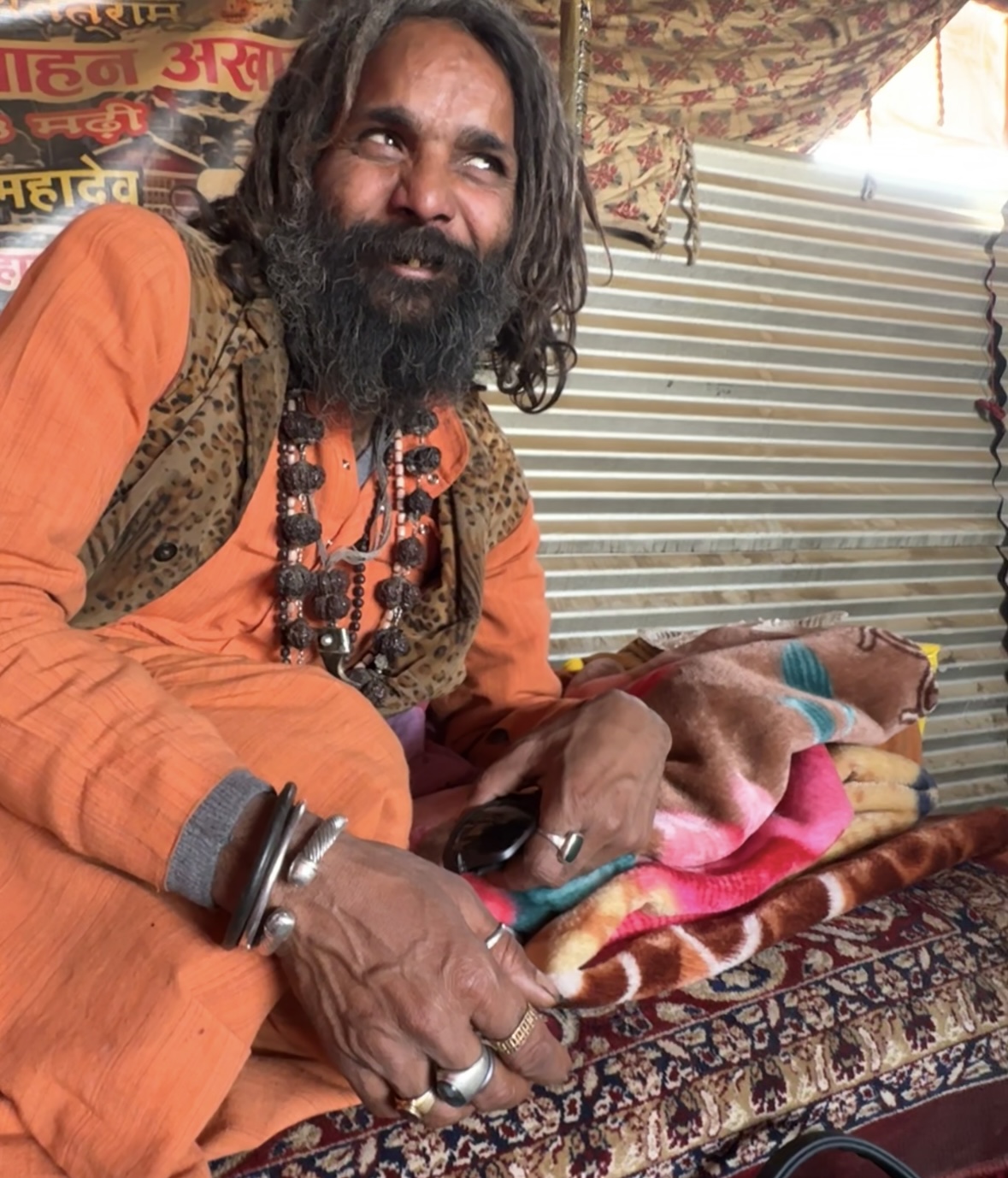
When we first made eye contact, something- a sparkle-felt deeply familiar. Recognition of something sacred. Soulmates? A profound connection for which I still have no explanation.
As we elbowed our way through the crowd, gripping onto each other’s clothing to avoid being separated, the police had barricaded the road. Rakesh Giri smacked one of the policemen on the head, and pulled his ear, shouting at him to get out of his way. At the Kumbh, the Sadhus are kings and above the law.
Rakesh Giri was the Guru of the tent - a sprawling seven-room structure with a sacred fire pit, a kitchen, and a “bath” area. He apologized for not having a better room for us, as the tent was full, putting a plastic awning out over some dry grass for us to sleep on. I estimate about 30 people were staying in his tent when we first arrived. There were also several Sadhus (I wont number them because according to Sadhus “babas don’t do counting”).
The first question that is asked of any new person is “where are you from?”, which then becomes how you are called until you earn your name being remembered.
So in our tent, we had Calcutta Baba who was doing the cooking (chapatis and vegetables for dinner every night) making countless of cups of chai, cleaning and heating the water for morning baths, Orissa Baba who wears red because he is a devotee of the Mother, Kedarnath Baba who likes to come and go as he pleases (they call it ‘roaming’), and many other Sadhus and Babas that would come for visits, to smoke chillums, drink chai and chill around the fire. One day I drank 22 cups of chai (here showing one of the many ways I broke Sadhu rules - as one of the ways I cope with overwhelm is to count things).
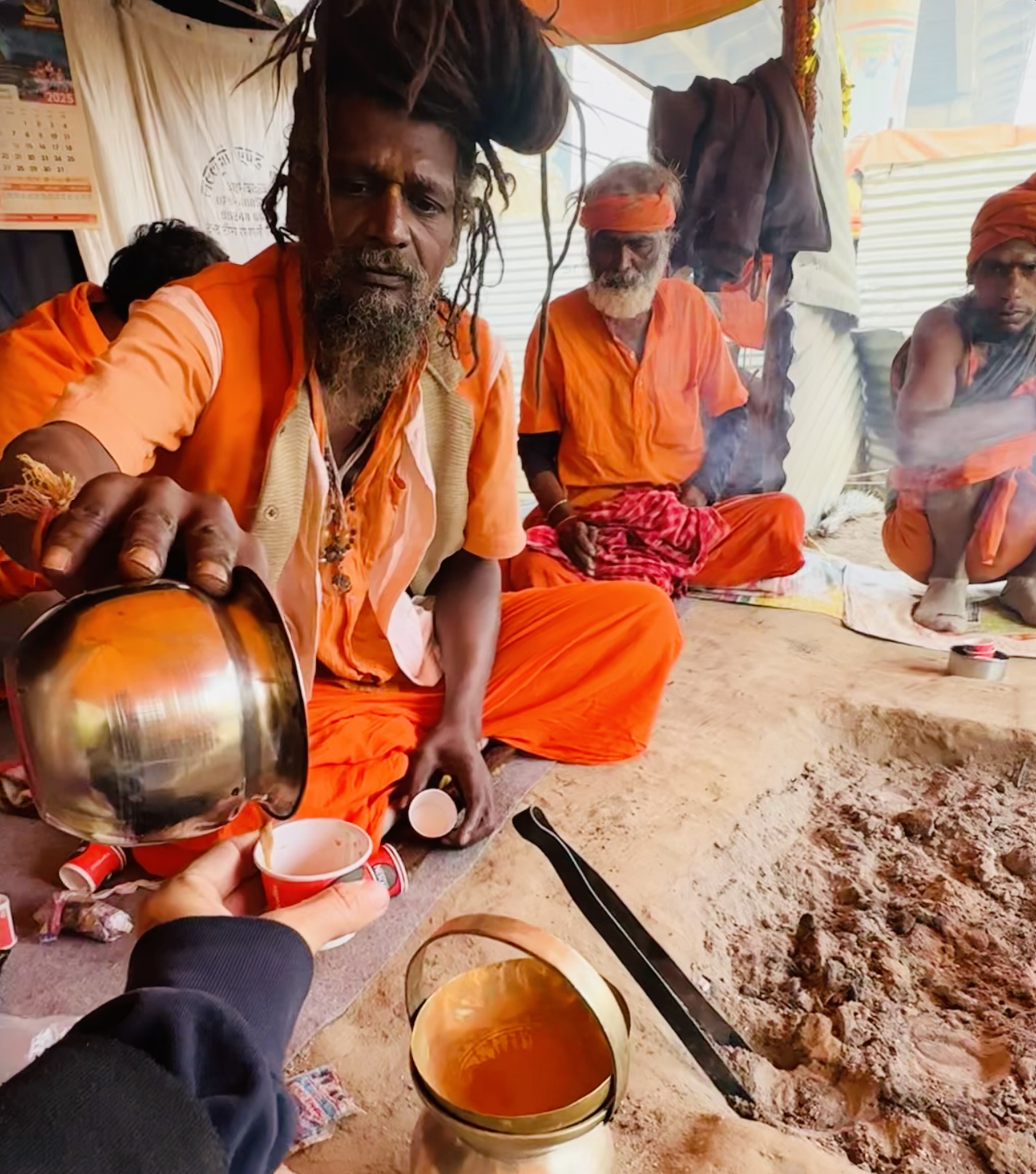
(Calcutta Baba serving me chai)
During the six weeks of Kumbh Mela, there are five sacred bathing days. The night after we arrived was one of them. The first Sadhus go at around 3 a.m. In past Melas, fights had broken out between Akhadas (Sadhu lineages) over who would bathe first, one time resulting in hundreds of deaths. The British imposed order and set up schedules when they were in charge, which I think are somewhat still upheld today (again, this is India and there are no fixed rules for anything).
The famous Naga Babas (naked Sadhus) are not peaceful monks. They are the warriors of Shiva, covered in the sacred ashes from the burning of bodies, many roam with weapons, tridents, gold and silver clubs, and swords. They fiercely defend their sacred spaces, and it quickly became one of my favorite things to see Naga Babas getting angry.
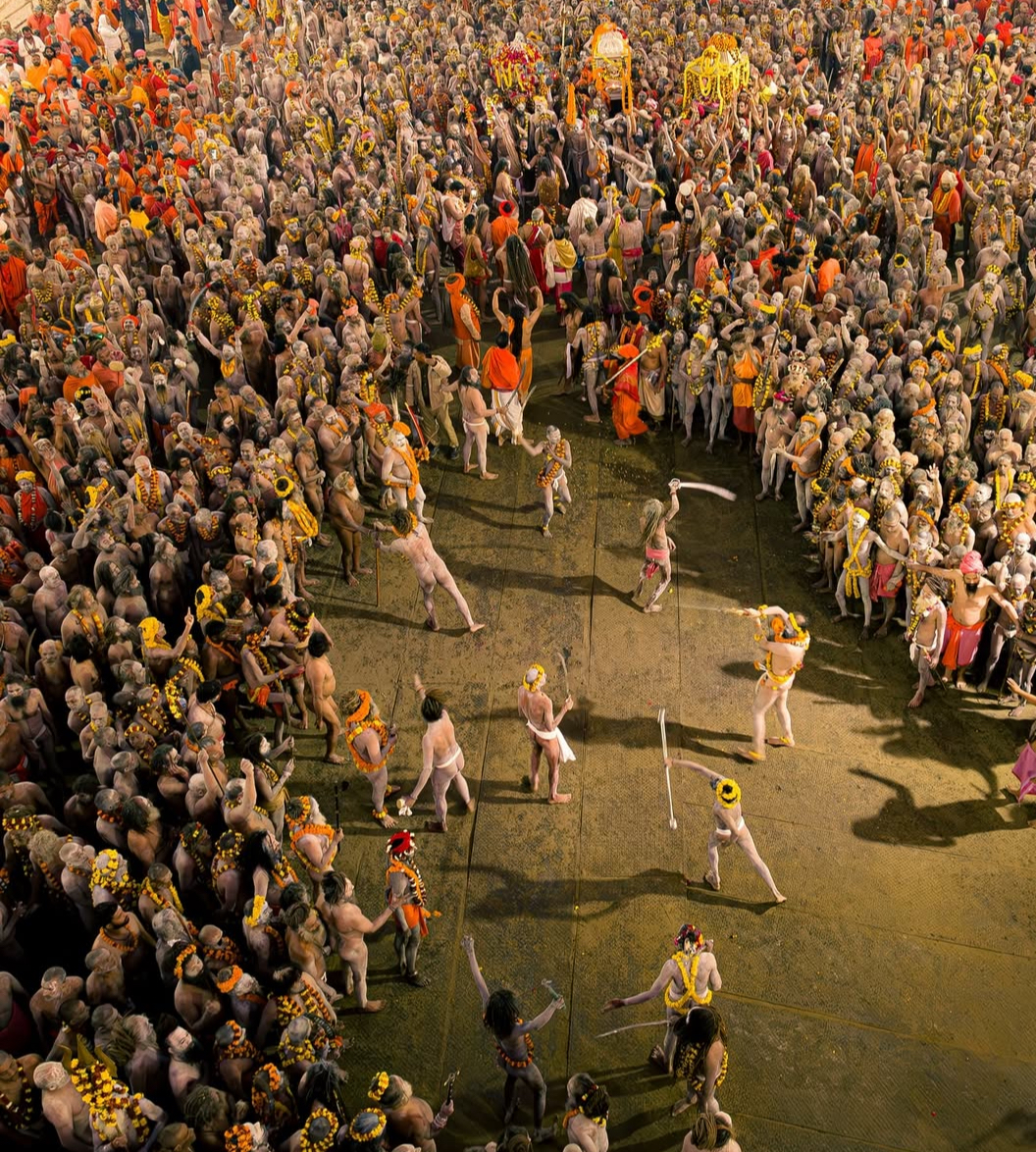
One of my favorite descriptions of these Sadhus comes from the Rig Vedas:
Sometimes naked,
Sometimes mad,
Now a scholar,
Always a fool,
Thus they appear,
the Wise Ones.
Around 3 am, I woke to the sound of countless feet rushing past our tent, many voices chanting mantras, and warnings being shouted as pilgrims and Sadhus pushed toward the water. My intuition told me to stay put, so I didn’t venture out of the tent.
That morning made international news - as between 30 and 120 people lost their lives in the stampede.
This is another thing that is difficult to comprehend - that in their desperation to cleanse their past sins, people pushed so hard that so many lives were lost, trampled to death. But this is India, where spiritual madness is sanctified. I have also thought that in the bigger picture, probably more people died each day of natural causes during the Mela, than during the stampede. It is also a shame that this was the one story of that made it around the world.
I had very little internet access during my time there, so I was a few days late in responding to the worried messages from many of you asking if I was safe.
I was very safe. In some ways, I don’t think I have ever felt as safe as I did being looked after and protected by Rakesh Giri and the other Sadhus.
Later that afternoon, we went for Sangam with some of the Babas from our tent. I’ll be honest - I couldn’t bring myself to fully submerge. The Ganges is filthy, and with so many people pushing and shoving, I didn’t feel safe enough to close my eyes and put my head underwater. But I did splash my head three times as instructed. After Sangam, you’re not supposed to shower, so the blessed water remains on your skin.Water that looks dirty, swirling with debris, flotsam and filth.
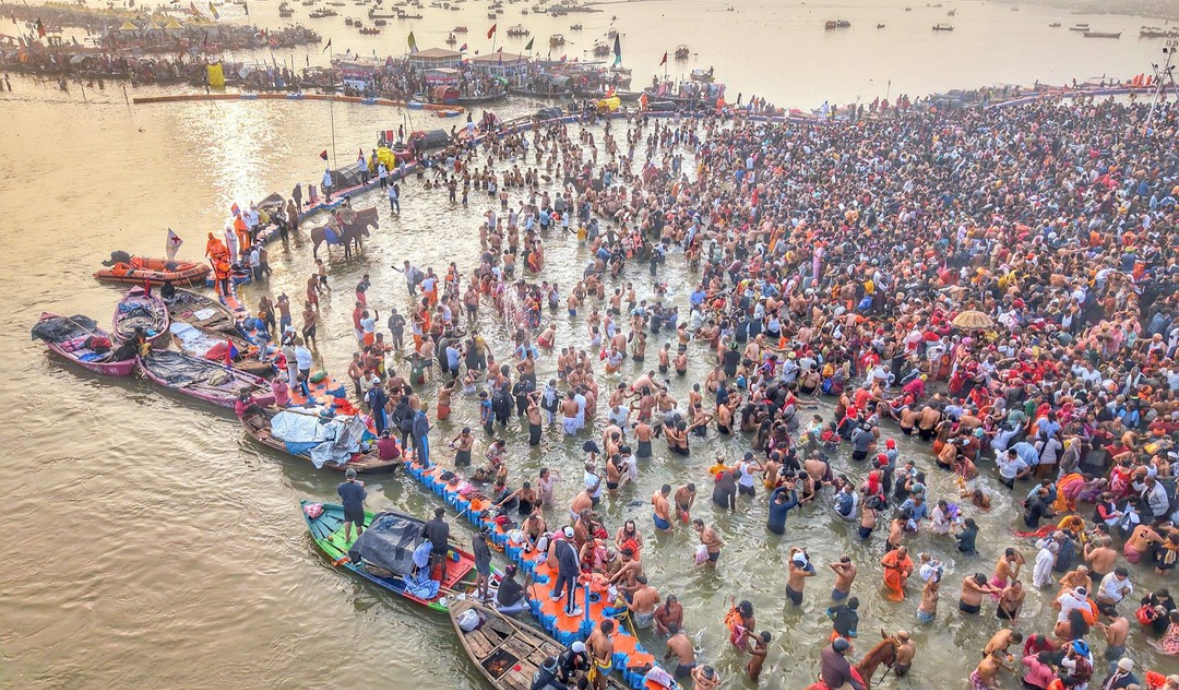
(sangam)
Another part of this story that is important is that some food was prepared with water from the Ganges, and I have eaten and drank Ganges water. In some ways, perhaps that is also part of the miracle, that I didn’t get sicker than I did, and that I have survived to tell my story.
We took turns going in for Sangam while part of our group stayed back to guard our belongings in the throngs of pushing and shoving pilgrims. The shoreline was covered in millions of lost and abandoned shoes. Thankfully, our Babas had warned us to go barefoot to Sangam to avoid losing ours, but I did have the thought that it would be cool to make some kind of art installation out of the lost shoes (I have not pursued that idea).
As I made my way out of the water, and started changing into dry clothes, dizziness overtook me. My balance gave out, and I collapsed on the ground. Lal Baba—the kind, ever-watchful red Baba from Orissa who had guided us to Sangam—smacked my head hard about ten times. Bursts of light shot through my body and an inner-standing of something too profound for words flooded in. I was pulled to my feet, and moved into a shady spot where I sat until I regained (full?) consciousness.
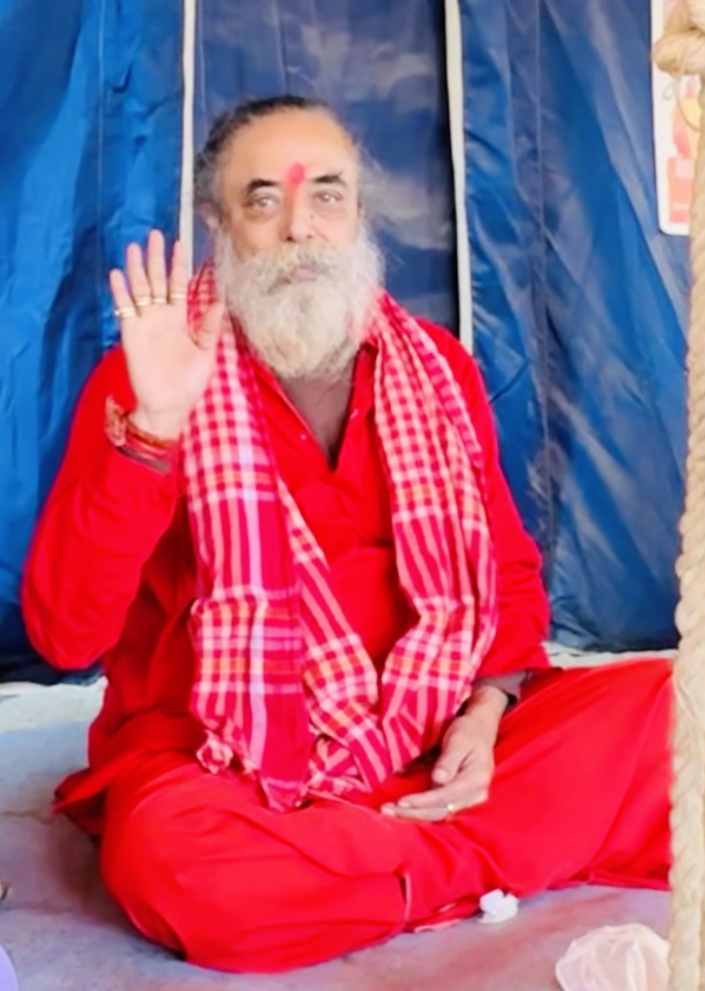
(Lal Baba)
This is where I will leave my story for part 1. There is so much more to share. I am painfully aware that I am limited by words and unable to fully do justice to my experience, the Sadhus, the Kumbh and incredible India.
So, bear with me as I bare my soul -piece by piece - as I will continue my attempt to narrate the journey that broke my ego and brought me more peace than I ever experienced before.
