- Mar 30, 2025
Sadhu Stories part 3: Power & the Paradox of Freedom
Inside the Hidden Hierarchies of Sadhu Life
The global elites justify their position as rulers and landowners saying they are ‘chosen by god’ and similarly in India, the caste system was enforced through ‘divine ordinance’. The Victorians were obsessed with “knowing ones place” - and by default, keeping others in theirs. There was a lot of talk of being of ‘good breeding’, and while there was not much mobility especially from the ‘poor’ to elevate to nobility, the caste system is a master class in controlling peoples fate.
The caste system is incredibly complex, and while it is technically outlawed, it still influences Indian society. One of the most viral people from this years Kumba Mela is Mona Lisa, a young girl who came to sell garlands and beads. Her face was all over social media, and she is now on her way to become an actress in Bollywood. There was a lot of outrage and uproar from different sides, because the ‘typical Indian uncles’ immediately started asking what caste she is and questioning the suitability of elevating someone from such a low caste as hers, that she should know and stay in her predetermined place.
I am writing about the caste system, as these categorizations of people still permeate Indian society and culture today. Very oversimplified, there are four main Varnas (categories) of humans in the caste system:
The Brahmins - the spiritualists, the priests, scholars, astrologers and teachers
The Kshatriyas - the warriors and rulers
The Vaishyas - businessmen, traders, and money makers
The Shudras - the laborers, service providers and worker bees
There are also the Dalits aka ‘untouchables’, who are the outsiders of the caste system. The literal translation of Dalit is ‘the oppressed’ or ‘the broken’. These human beings face levels of discrimination that is hard for a westerner to comprehend. They are only able to do the most ‘polluted’ jobs, like cleaning toilets or burning the bodies of the dead, they cant enter temples, drink from shared wells, or even walk in certain streets. The untouchables are so dirty that even their shadow touching a person from another caste is absolutely prohibited as even their shadow is polluting.
The only way to change your caste is through death and reincarnation, i.e. ‘better luck next time’, although of course, the idea being that how you well you live your Dharma (which is depending on your caste, for example, a warrior can kill, the other castes cant) will determine what you get to be next lifetime.
All of this is important because it is the backdrop and context in which Sadhu culture comes from. In order to understand the hierarchies and dynamics of the Sadhus, we need to see the bigger picture, and ultimately, what they are up against. I wrote before that the only way to change your place in the caste system is by dying, but there is also another way: you can metaphorically die, by renouncing your worldly identity, leave your family and caste behind and transform into a Sadhu.
This means that is it is possible even for a Dalit to become a Sadhu, and that it could happen that one day a Brahmin comes to bow and touch the feet of a man or woman who was born as an untouchable.
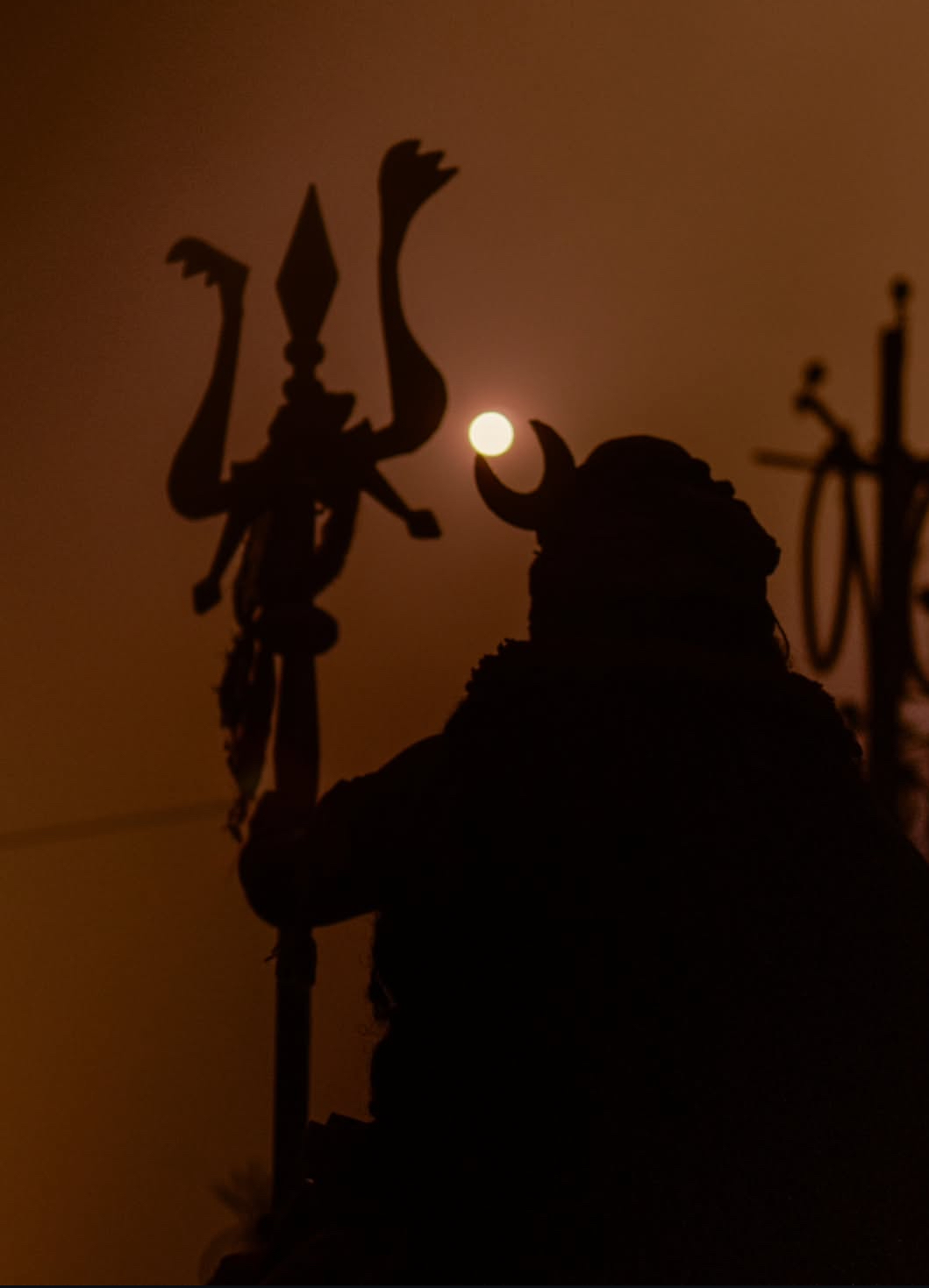
A Sadhu cant have children, if they do, they are no longer a Sadhu. In the stories I was told of this happening it was always with a foreign woman, and I met one such Baba who had gotten married, had kids, but then after many years, left his wife and returned to Sadhu life. He would never be able to become a Guru, and he was no longer allowed a position in the Akhadas. He had dreads, wore orange and looked the part, and had many Sadhu friends, but he now has an outsider status and cannot not have his own tent or disciples.
Many joined the Sadhu life in childhood, and it is all they’ve really known. Many of them are illiterate and never went to school. Rakesh Giri became a Sadhu at age 10, and I often heard him say that "school makes people stupid, experience makes you wise”.
If you want to become a Sadhu, first you must get the approval of your parents, and then follow and learn from your Guru. Some Sadhus join much later in life, a bit like Gautama the Buddha they may have been from a high caste and had all kinds of luxuries and successes, but they leave it all behind. From what I was able to understand, generally (again there are no fixed or hard rules) after 12 years, a Sadhu will return for some kind of ceremony with their family, but that is the one and only time they will see them again, and I don’t know more than that.
It is not advisable to ask a Baba why they chose to become a Sadhu, or what caste they were or what their life was like before. If they want to tell you, they will of their own accord, but questions like these can result in you getting shouted at, or beaten and expelled from their company.
They say that Sadhus don’t value material possessions, but at the same time, they love getting big donations, brag about how much money they got, and certain items have high value in their culture. Things like rudraksha beads and malas (the bigger the better), silver, gold and precious stones are worn with pride, expensive watches (you’d often see Sadhus wearing many watches at once, both on their arms and around their ankles), and I was asked several times to look up the value of a donated watch online, and they would gleefully tell others “this watch costs X rupees” and brag about the value of certain food items and show off. These days, mobile phones, especially iPhones, as they are the most expensive, are other status symbols for the Sadhus.
There is something undeniably weird and funny about a Sadhu, especially a Naga Baba, sitting and watching YouTube videos, or doing a video call.
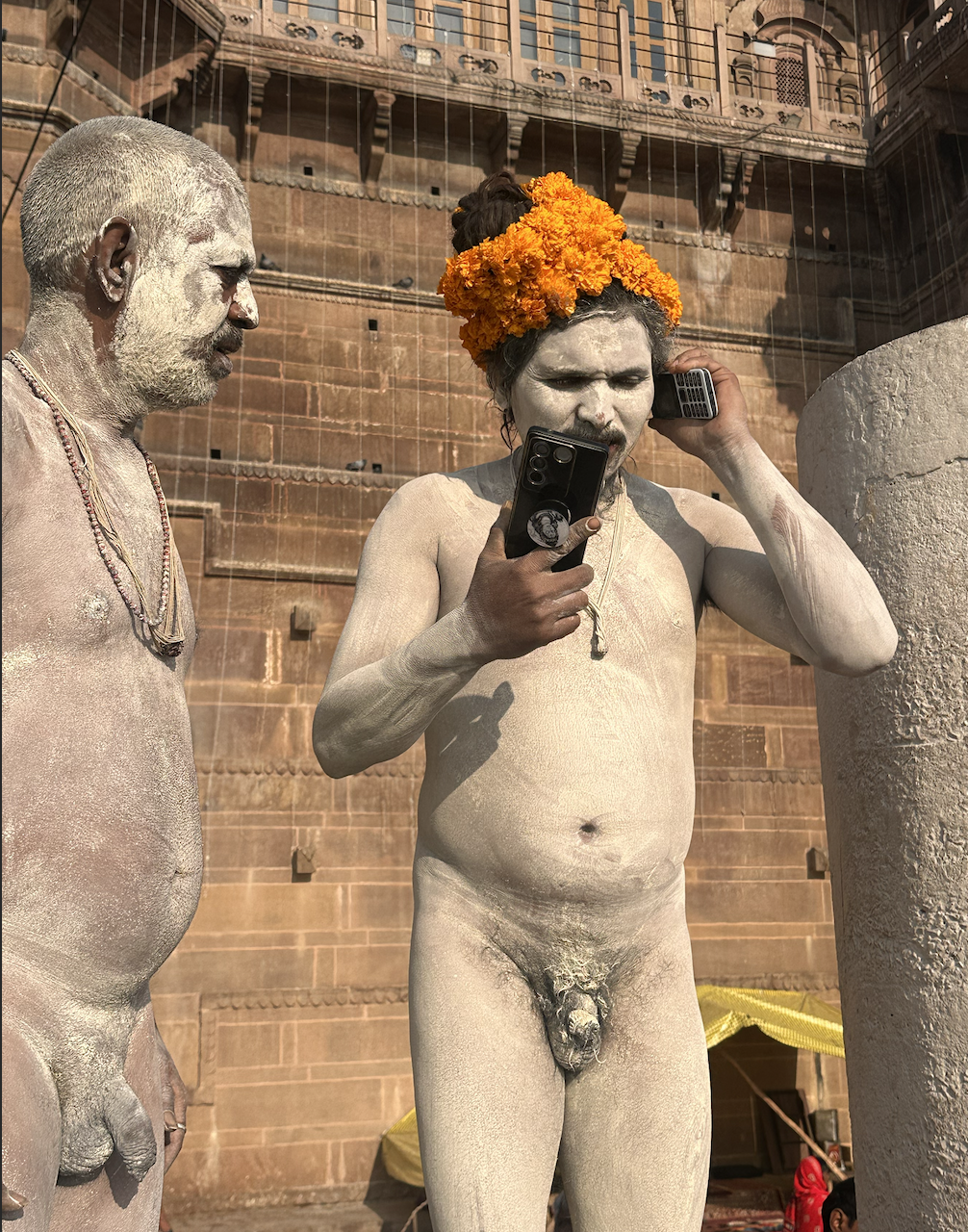
Another status symbol is how many disciples you have, and the quality of these. Having foreign disciples is good, I guess also because they come with donations in other currencies.
The gift economy of the Sadhus made no sense to me. One day Rakesh Giri asked me to come roaming with him, and as we walked around the Kumba Mela, we visited several other tents where we would enter, sit to drink chai and smoke chillums, and Rakesh Giri would give several thousand rupees to the Guru. During these visits, he would sit on the deus next to the other Guru, and he would indicate where I was to sit. I understood that I was being shown off, in a way, and that my presence was elevating his status in the community.
Their rules and systems of conduct are so complicated that I have only been able to scratch the surface, but it also became massively fascinating to me, and a learning more about it and how to ensure I kept myself both protected and respected. The name of the game, just like for Shamans, is Power. Without power, you are nothing. With Power comes responsibility, and that responsibility ultimately is about taking care of others. Your Guru will make sure you are fed, looked after, that you are healthy and happy.
For Sadhus, your status is not just about what others give to you, even more important is what you give to others (and which others). It is very important to perform Bandhara, to cook food and feed many. Rakesh Giri did a Bandhara in Varanasi and prepared a sweet made from milk and saffron that he spent all night preparing and then going on a boat to give out. He told me he fed 10’000 Sadhus and spent 2 lakh (200,000 rupees, about €2000), but as Babas dont do counting, I dont know if those numbers are accurate.
During my first few days, I wanted to learn the rules. There was so many rules. While the Sadhus in many ways are ‘free’ and have stepped out of society and are no longer bound by its expectations and laws, they have plenty of their own.
The most obvious ones are things like you mustn’t wear shoes when you enter the tent, your mouth should only touch your right hand when smoking the chillum, don’t talk too much, or ask impertinent questions, only high status people can sit on the deus, and only the Guru can sit in Agnistambhasana.
While many other seekers would come and ask BIG questions, like “what is the meaning of life?”, “how can I get closer to God?”, “how to escape suffering?”, my questions were more practical, like “which Akhada is that Sadhu from?”, “why do those Babas wear their dreads on that side of their heads and you all wear them on the other?”, “who decides who can sit where?” and “do all servers wear orange vest and all gurus wear printed pattern vests?”
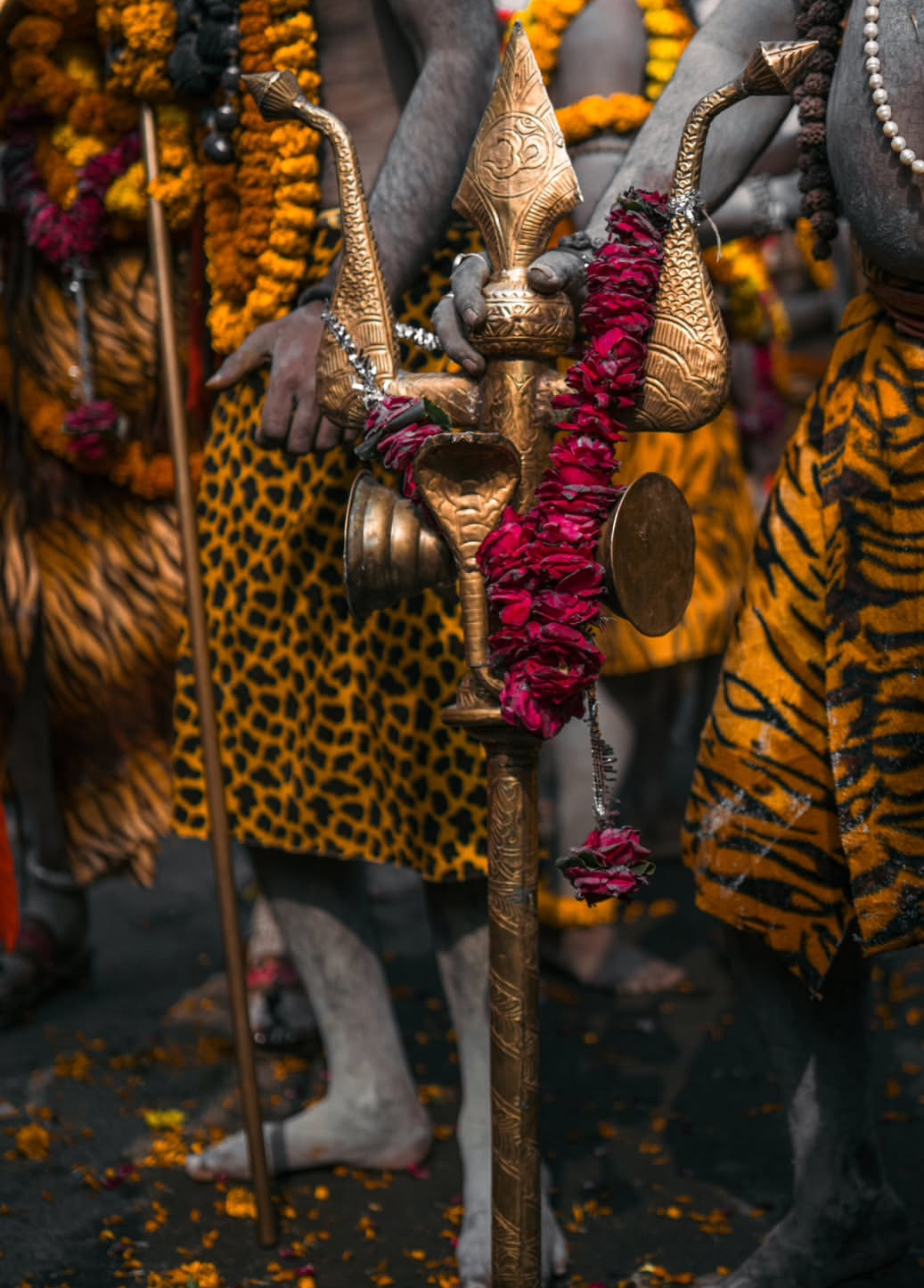
It is not advisable to ask a Baba why they chose to become a Sadhu, or what caste they were or what their life was like before. If they want to tell you, they will, but questions like these can result in you getting beaten and expelled from their company.
The Sadhus don’t teach explicitly, you sort of have read between the lines and figure it out for yourself. It was fascinating to me and I really enjoyed figuring out the way to play the game and how to make sure I maintained a high status position in the group dynamics.
But then every time I thought I had figured it out, another Baba would come and do exactly the opposite. One Sadhu came and smoked the chillum through his left hand, another crossed his legs the way I’d been sharply admonished not to.
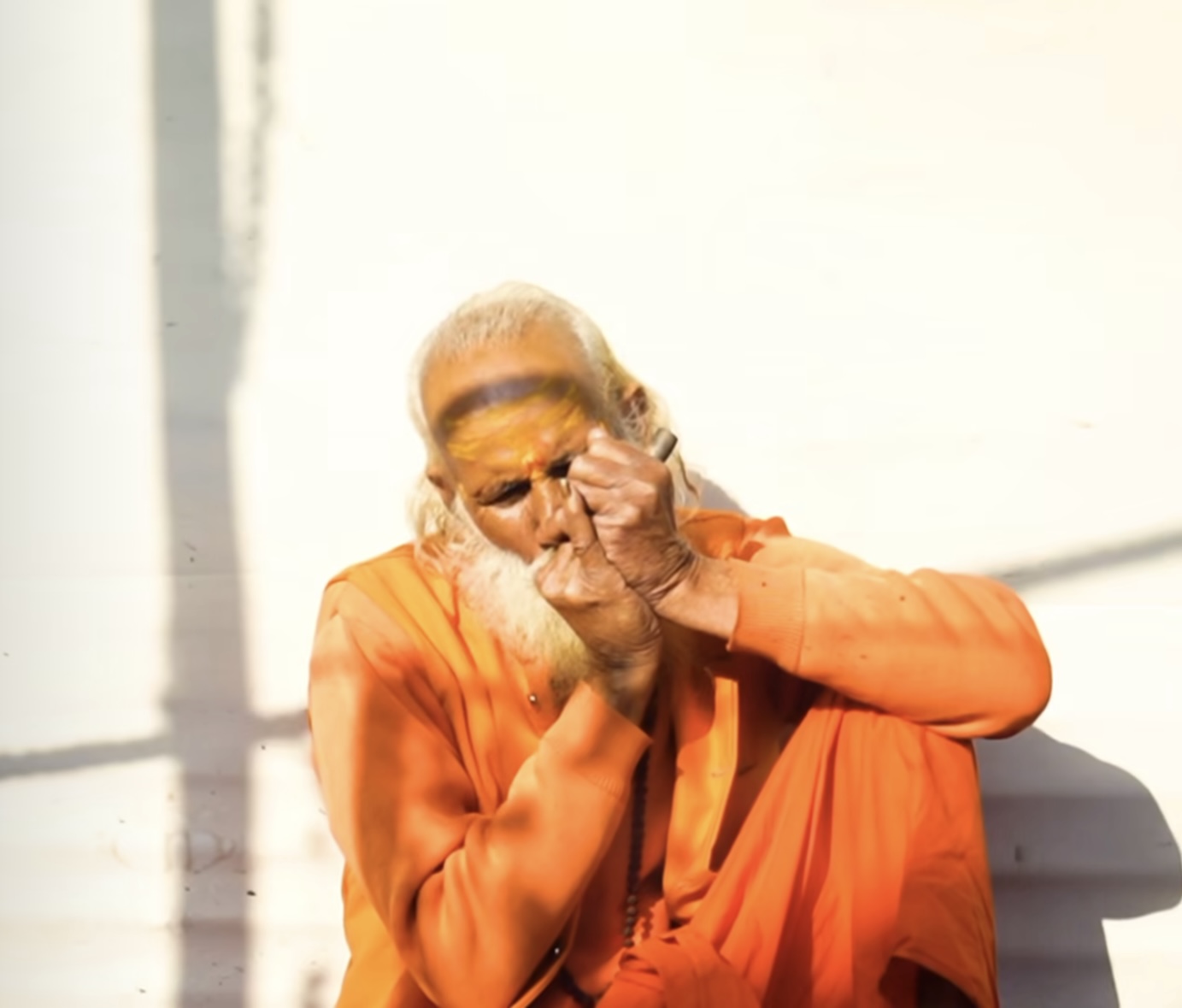
Through the many hours and days of intense presence and observation, I started to realize that what was most respected in Sadhu society is the ability to trust yourself.
Many Sadhus would say about Rakesh Giri that “he has a different thinking” in a way that seemed to express a mix of admiration and frustration, but clearly showing that he was in a league of his own.
I also began to realize that it was the individuals themselves, who grew up in these hierarchal systems, that would put themselves where they felt they belonged.
We are all products of our programming, and as it didn’t feel right for me to bow or touch anyones feet, I never did this. Through observation I came to realize that many of the same things that apply in modern western society is applicable when socializing with the Sadhus, but others are total faux pas. It is not cool to enter a tent and smile and introduce yourself and shake hands for example. If you want to be respected, come in without making a fuss, claim your space, keep your eyes to yourself, and wait to be acknowledged.
There were many times I felt I was sitting with a pack of wolves. The adherence to hierarchy, the unpredictability, and the tough love felt more real than and easier for me to navigate than the politeness and inauthentic relating we often perform in western society. I was so aware that my experience and acceptance into their group was incredibly rare. I’ve studied yoga, meditation and hinduism for more than half my life, so I knew the lingo and could keep up and bite back when pushed.
So the next time I was told a new rule, I replied “I hear you, but I am going to listen to my heart and do what I feel is right” - which was met with laughter and respect. This put me higher in their regard than if I would have done everything I was told.
Again, it is specific to the request and I was able to do this partly because of my position as an outsider, and partly because it felt totally authentic for me not to do that in the moment. At one point a Baba I had never met before, tried to get me to clean up a mess, and I replied “I dont do cleaning”, because as a white woman, if I would have let him boss me around, especially doing cleaning which is a ‘dirty’ job, I would have allowed myself to be put down and encouraged more disrespect.
When Rakesh Giri, my Guru, asked me to wash his dishes, and there was nobody else around, I did. There are no hard rules, everything is context and situation dependent.
The Sadhus, just like me, value freedom above everything else. They will do their best to try to convert you and convince you of their ways, but these are tests of your own integrity and mental powers. The more you bow and acquiesce to their commands, the lower you place yourself in the hierarchy. Respect is earned based on how you carry yourself, and I think the greatest compliment I was given was “you have a very good mind” (which is another of these beautiful contradictions, coming from people who value not having too many thoughts).
One night, two people entered the tent who’s energies were so powerful I was absolutely captivated. The woman wearing red was photographed by some journalists, and it is their photo of her that I am sharing here, it felt totally inappropriate to bring out my phone while I was in their presence. It was very cold and we were all huddled up as close to the sacred fire as possible. She asked for food, and then leaned over, grabbed the fire poker and pushed all the coals closer to herself. That was a big moment for me, a lesson in self-love and holding yourself in high esteem. Anyone else could have done the same, and the way she did it was so certain, like she gave herself the right to more warmth.
The man with her was wearing black. The black babas are different from the orange, red and white wearing babas. They have a different kind of power, they drink alcohol, and eat meat, and it is even rumored they eat the flesh of dead people. Black babas pursue the path of enlightenment through overcoming their own disgust. They are both terrifying and intoxicating, their energy is something else than the rest. At one point he looked at me, or maybe not looked at me, he saw me. We made eye contact and I was sucked in. Something happened, all the hairs on my body stood on edge. I felt like I was tripping, suddenly seeing beyond this realm. Will you believe me when I tell you I saw myself being born, the Big Bang and the end of the universe all at once?
His face was completely neutral, his eyes aflame. I felt like a small child, and my mouth kept smiling, even though I tried my best to emulate his resting bitch face. I was in awe. I dont know how long that moment lasted, maybe about 3 minutes in real time, and lifetimes in the other realms.
(☝️this is the black Aghori Baba)
I saw both of them several more times, and at one point even got to engage them in conversation. They started smiling when they saw me, and I know it might sound silly but their approval meant the world to me. They both made a massive impression on me, and when I close my eyes, I can still see him staring right into my heart-soul.
I would have liked to know them more, but in some way I am glad not to, because this way they get to keep their mystique.
The deeper I went in Sahdu life, the less I used my phone and the less photos I took. There were many moments I wished I could document what I got to experience, but I was also so aware that pulling out my phone and taking pictures would have turned me into a tourist. So here I am doing my best to paint their portraits in words, and I hope you are able to tune into the energies of these humans, the free and wild ones who exist beyond the confines of their culture and societal norms.
with special gratitude to Manoj for letting me share his beautiful photos of the Sadhus I met and who made such a powerful impression on me.
Sadhu Stories part 4: Initiation & Becoming Maya Giri